Inspection Workflow
The Mobile Detailer’s Photo Checklist: What To Capture Every Time
A repeatable before-and-after photo checklist for mobile detailers, built around speed, consistency, customer trust, and dispute prevention.
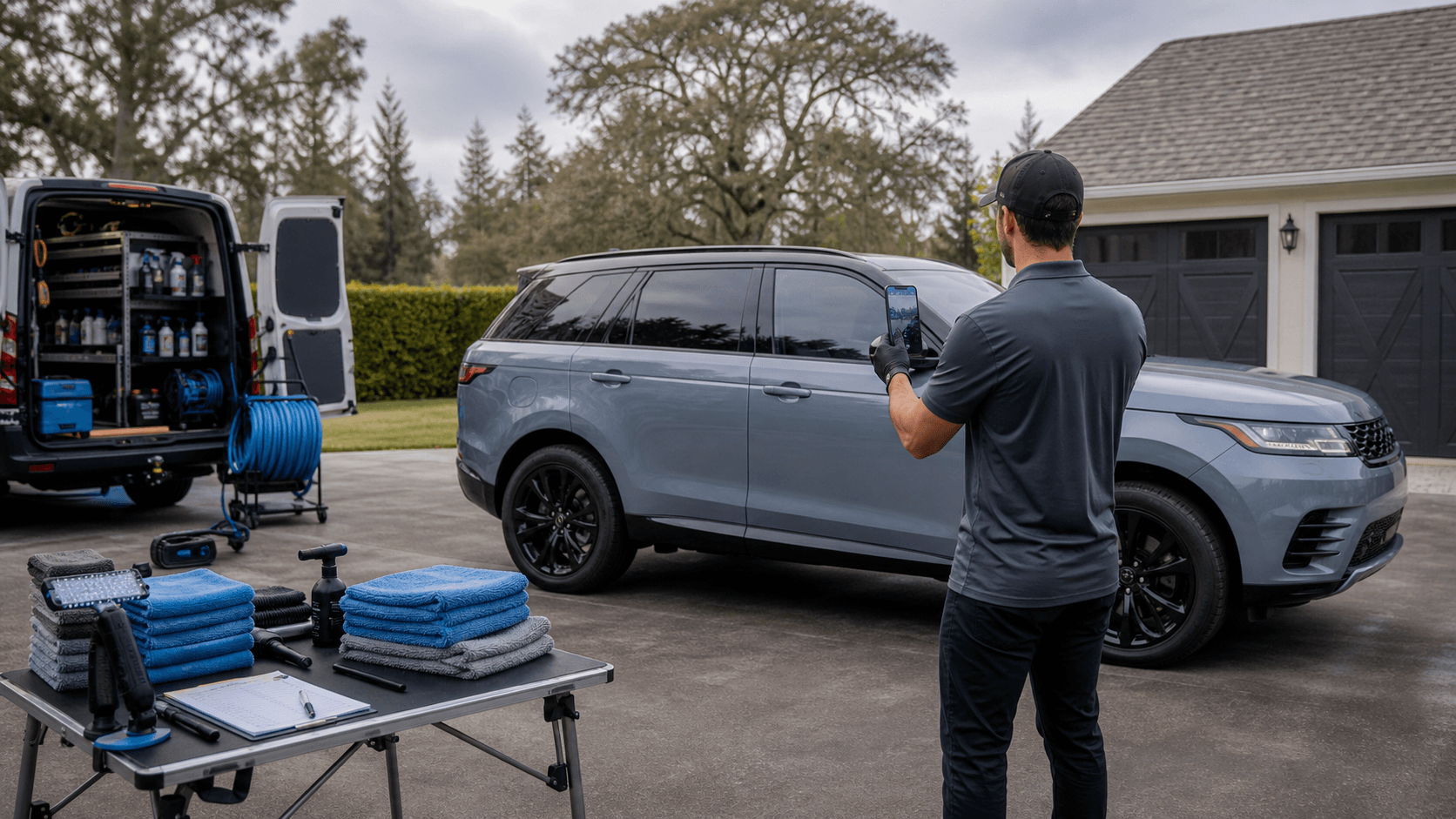
Mobile detailers work in driveways, parking lots, dealerships, apartment garages, and job sites. The environment changes constantly, which is exactly why the photo process should not.
A checklist gives every job the same backbone. It makes training easier, shortens capture time, and keeps important angles from getting skipped when the schedule gets tight.
Capture In Walk-Around Order
The fastest checklist is the one that follows the way you already move around the vehicle. Start at the front and work clockwise. This prevents backtracking and makes the final report easier to scan.
For most jobs, the core set should include front view, front bumper, hood, windshield, driver side, roof, rear view, rear bumper, trunk or cargo area, passenger side, wheels, windows, door panels, front seats, dashboard, and rear seats.
Use Required Slots For The Angles That Matter
Some photos should be non-negotiable. Broad exterior angles, bumpers, wheels, glass, and interior seating areas are common sources of customer questions. Required slots keep those areas from being forgotten.
Optional close-ups still matter, but they should support the required photos rather than replace them. A close-up of curb rash belongs next to the wheel photo, not floating alone in a camera roll.
- Full front and full rear for baseline condition.
- Driver and passenger sides for dents, trim, door edges, and reflections.
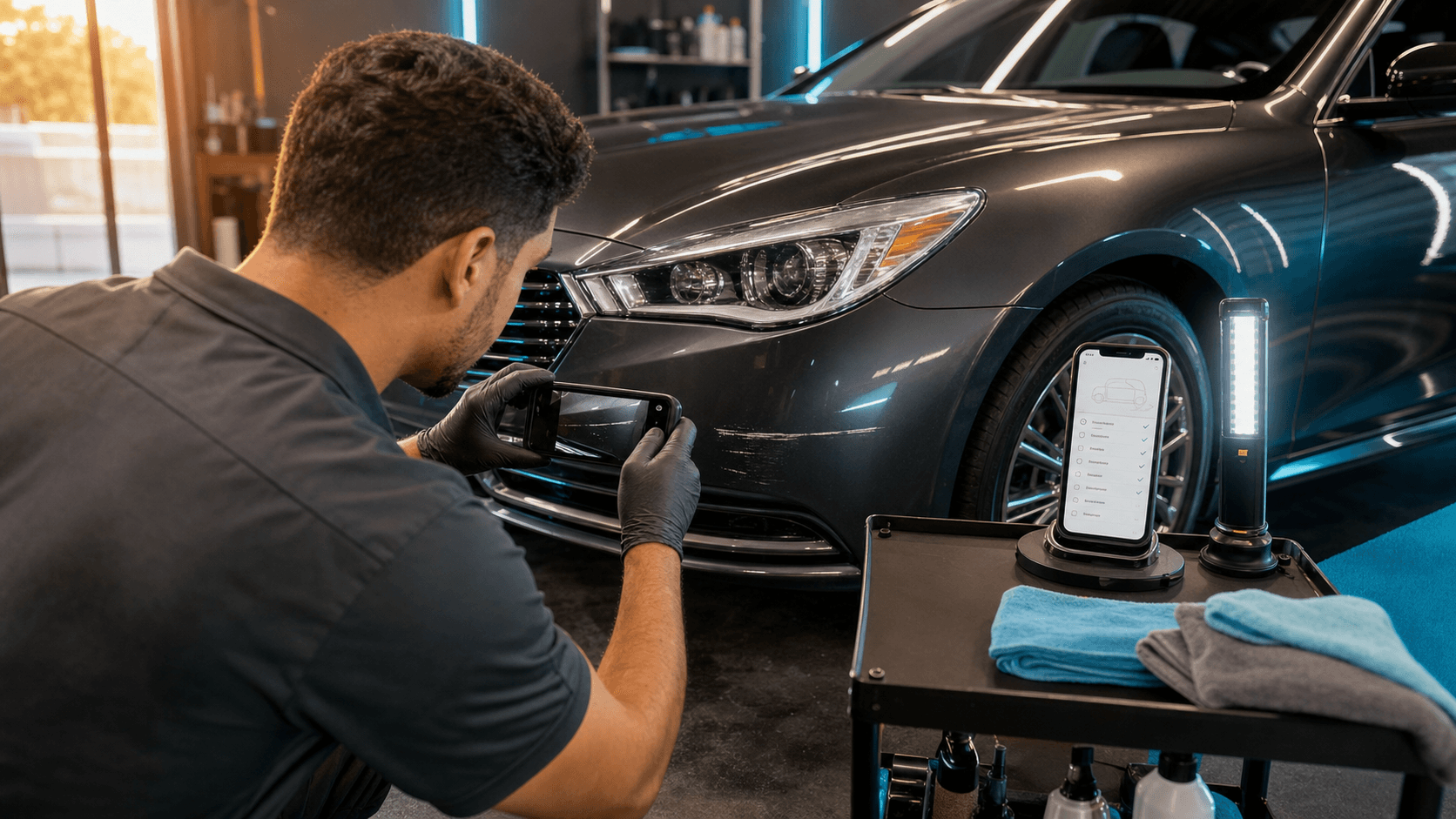
- Bumpers and wheels for chips, scuffs, and curb damage.
- Windshield and windows for chips, cracks, tint issues, and residue.
- Seats, dashboard, door panels, and cargo area for interior wear or stains.
Make Before And After Photos Comparable
Before-and-after photos only work when the angles line up. You do not need tripod-level precision, but the distance, orientation, and framing should be close enough that the customer can compare condition without mental gymnastics.
This is especially important for paint correction, ceramic coating prep, and interior shampoo work. The more repeatable the framing, the more professional the transformation looks.
Create A Fast Exception Process
Not every vehicle needs thirty close-up photos. The checklist should be quick by default and expandable when something looks risky. Add extra photos when you see existing damage, unusual wear, fragile trim, prior repairs, or a customer concern.
The key is to make exceptions easy. When a detailer has to fight the process to document a problem, the process will be skipped on busy days.
Turn The Checklist Into A Customer Experience
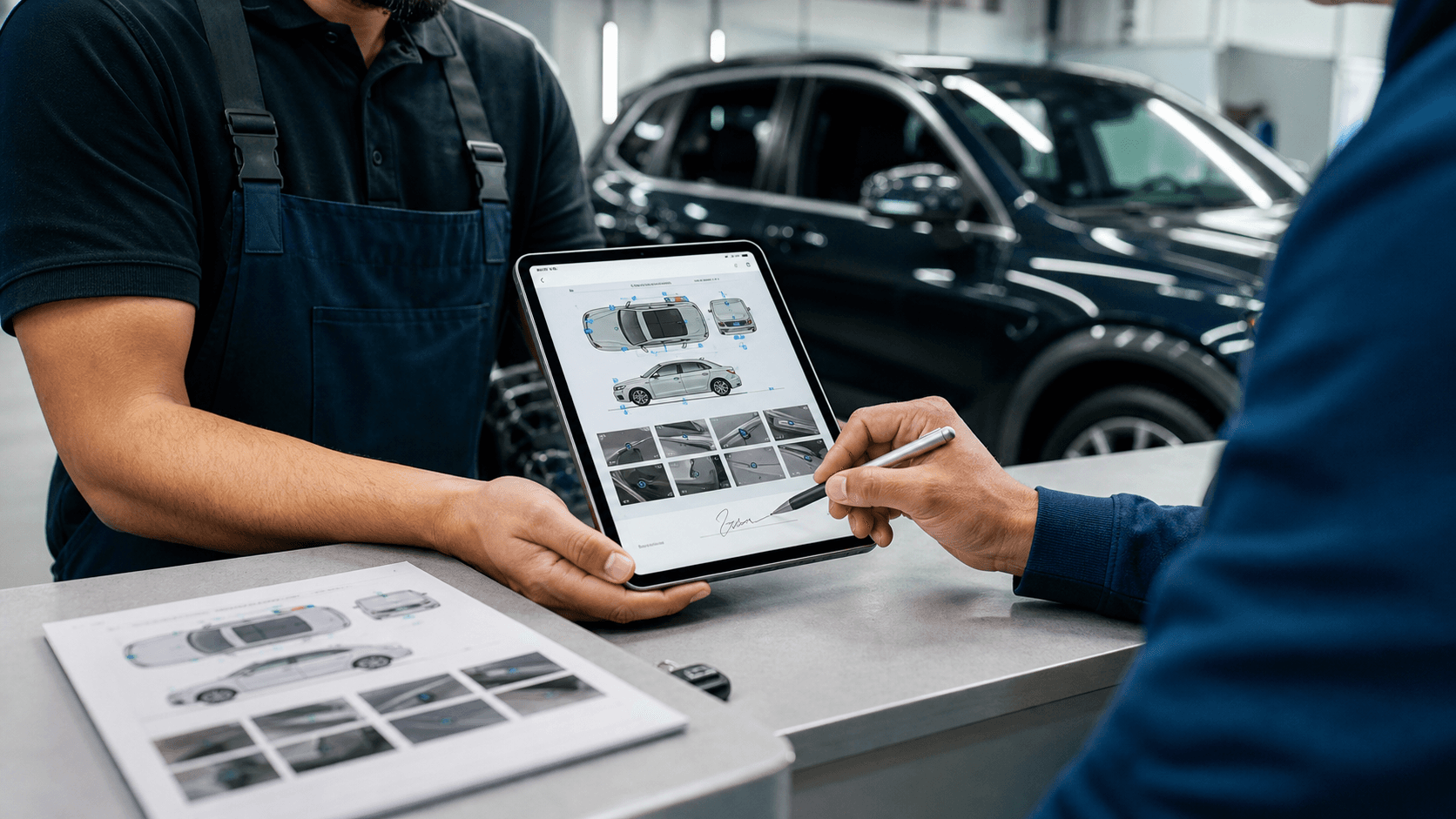
Customers notice when a detailer has a system. A consistent inspection makes the business feel more established, even for solo mobile operators. It says: we are careful with your vehicle, and we keep clean records.
That small moment can change the tone of the job. Instead of seeming defensive, documentation becomes part of a professional intake process.